I. Supply Chain Trends and Innovations in 2025
According to the experts' logistics forecast for 2025, secure and resilient supply chains will be crucial for daily operations and meeting consumer demand. With the rise of cloud, control systems and IoT, scalable solutions for data management and logistics tracking will become increasingly essential in the coming year.
As our world has become totally globalized, a grain of sand can slow down the global economic machine. Literally. This is what happened following a sandstorm in Egypt that caused the Ever-Given container ship to drift, blocking maritime traffic in the Suez Canal (one of the most important crossing points on the planet) for a week. The supply chain is therefore under constant pressure from external factors: geopolitical tensions, natural disasters, accidents, etc.
However, the world of the supply chain is evolving rapidly. Digital transformation is one of the components that has transformed the world of logistics and transport, alongside ecological considerations, to invent a sustainable future. A detailed review to learn more about the trends of the future of the supply chain.
Reports such as the Supply Chain Outlook Report 2025 by Prologis conclude that cloud-based supply chain management platforms and real-time inventory management systems will be among the logistics trends for 2025. In this article, we present the transformative technologies that will shape industrial and commercial development in the coming year.
I.1 Artificial Intelligence
It is everywhere: in our software, our smartphones, our homes, and of course, on production lines, ships, planes, trains and cars, as well as logistics warehouses. Directly linked to the IoT (Internet of Things), artificial intelligence (AI) can collect a lot of data from sensors located at all strategic points in the production and transport chain. AI can thus organize and analyze data to facilitate decision-making. It can also anticipate peaks in activity and rationalize the resources needed to carry out certain tasks.
Within tools such as WMS (Warehouse Management System) and TMS (Transport Management System), AI streamlines internal processes and facilitates networking between professionals. Thus, a task that took several hours with several people can now be automated via suitable software thanks to artificial intelligence. By working with AI on key topics like supply chain planning and inventory management, the most digitalized companies can go faster and further.
I.2 Autonomous Mobile Robots
Autonomous mobile robots (AMRs) will also be a supply chain trend that will gain traction in 2025. By 2029, 99% of manufacturers are expected to offer AMRs, cobots and robotic arms — these vehicles will increasingly be present in warehouses. AMRs are machines that can move freely around the facility and navigate around all types of static or moving obstacles, changing their trajectory in real time. These robots also adapt to the layout of the premises and allow the fleet to be easily expanded to meet seasonal demand peaks or company growth.
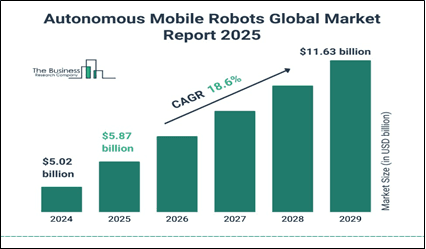
The use of AMRs is growing very quickly. The goal is to get as close as possible to real time to automate and streamline logistics processes. AMRs are a simple, efficient and cost-effective way to automate internal handling and transport tasks in almost any situation. Not to mention that autonomous mobile robots work 24 hours a day, all year round.
However, this does not mean that robots will completely replace humans. Here, we are closer to the concept of cobotics — using robotics to augment human capabilities rather than replace them. This concept aims to promote synergies between humans and machines to find the right balance between added value and productivity.
I.3 Blockchain
We have been talking about this technology for several years, notably serving as the basis for cryptocurrencies such as Bitcoin. It is a data storage and security technology that can have a significant impact in three key areas:
- Provide accurate and up-to-date information at all times.
- Ensure the visibility of data and information for all stakeholders.
- Ensure the security of all information contained in the blockchain.
Given the importance of data in supply chain management, there is no doubt that companies interested in blockchain will have a head start on their competitors. This is an opportunity to experiment with it in small touches on certain specific projects, although this requires solid internal expertise and a significant paradigm shift. We are at the intersection of IT, big data and supply chain where questions of data collection, processing and analysis can make the difference.
I.4 Digital Twins
Data science, which is experiencing a significant boom, offers immense opportunities in the logistics sector. Digitalization and automation provide leading companies with real-time visibility into their operations, helping reduce costs and eliminate errors. Storage and transportation players can create digital twins — virtual replicas of objects or processes that simulate the real behavior of their counterparts — to detect potential errors before they occur, optimizing operations without having to conduct tests on real objects.
I.5 Human-Machine Collaboration
The combination of artificial intelligence and human knowledge will increase the efficiency of operational processes in logistics planning and route management. The goal is to entrust technology with most of the calculations and data analysis, so that humans can make the best decisions based on a real-world context.
Machine learning helps predict demand, manage inventory or plan routes. Applications include the creation of models capable of adapting the parameters of robotic fleets to different scenarios, or the integration of AI into simulations that reproduce the complexity of real-world operations.
I.6 Cloud Solutions
Software solutions simplify supply chain management by centralising different sources of information in one place. Managers can track their stocks and orders or communicate in real time with their suppliers, so they can react quickly to changes in demand. Easy WMS, warehouse management software, is an example of a digital tool that makes day-to-day business easier. Designed to manage medium and large warehouses, it offers 100% cloud or on-premises deployment, as well as a user-friendly and intuitive interface.
I.7 Sustainable Logistics
This is a topic that goes beyond questions of image, communication or marketing. It is a change in mentality that touches risk management, supplier sourcing, means of transport, and corporate culture. Reducing environmental impact means looking for alternative materials and resources, seeking new ways to secure supply and minimize disruptions.
It needs to be an offensive approach that can include more severe sourcing from suppliers who also share a commitment to climate awareness and action — stronger standards on pollution, carbon footprint, and respect for human rights.
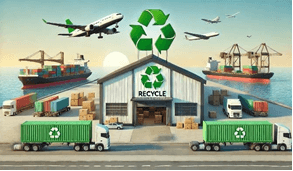
Climate-smart supply chain planning should become a fundamental element in an era where ecological awareness is a priority. The future of the supply chain is being invented today. While the COVID-19 pandemic has reshuffled many cards, it has above all highlighted the interdependence of our economy and the importance of having a solid, responsible and resilient supply chain.
Many strategies related to sustainability also aim to improve operational performance — examples include personalised deliveries that include information on the environmental impact of shipments or batch deliveries to relay points.
I.8 Digital Connectivity
According to Gartner, 40% of supply chain managers plan to invest in digital connectivity in the next three years. They are considering implementing application programming interfaces (APIs), blockchain and other solutions to exchange data in real time. The motivation for these transformations is the need to control the developments that may occur in supply chains.
II. Impact on Sub-Saharan African Businesses
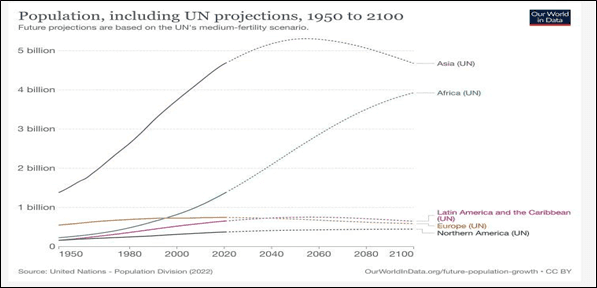
With an area of more than 30 million km² for a population of around 1.3 billion, Africa is potentially a power because it contains the majority of mineral wealth as well as 600 million hectares of uncultivated land, or 60% of the land. However, African populations struggle to benefit from these incredible resources which are exported without processing, due to the lack of a sufficiently diversified industry.
Despite undeniable success stories and the desire to modernize the sector — supported at the AU level with Agenda 2063 — the Supply Chain in Africa still faces major competitiveness concerns and lacks the sophistication to support African growth.
The diversity of African landscapes brings us to the first challenge of the Supply Chain in Africa: the lack of infrastructure, because it is not easy to cross them.
In 2025, the supply chain and logistics sector in Sub-Saharan Africa is undergoing rapid transformation. Innovations are reshaping operations, unlocking opportunities, and addressing longstanding challenges in the region.
Emerging Trends Shaping Sub-Saharan Africa's Logistics Landscape
Innovation in logistics is no longer an option but a necessity. Evolving technologies and market demands present an opportunity for businesses to rethink their strategies, particularly in complex markets like Sub-Saharan Africa. Below are the trends poised to shape the supply chain sector by 2025:
II.1 Internet of Things (IoT)
IoT devices are becoming critical in monitoring and controlling logistics operations. Connected devices offer:
- Centralized visibility of supply chain activities, including vehicle fleets and inventory levels.
- Enhanced decision-making through real-time data collection and analysis.
- Greater synchronization between production, distribution, and retail.
Some firms in Kenya, like Twiga Foods, utilize IoT and analytics for the competent execution of their food distribution network, greatly minimizing waste. Born in Kenya in 2013, Twiga Foods connects food producers to retailers via a B2B e-commerce platform.
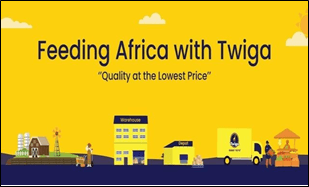
Despite the abundance of arable land, the market struggles to connect producers (often small-scale) to food distributors. Twiga Foods uses its SOKO YETU mobile platform to present a wide assortment of products to informal retailers, allowing them to make purchases and have them delivered within 24 hours — removing many intermediaries and significantly reducing the cost of food for consumers.
Twiga Foods has over 130,000 retailers, serviced by a fleet that covers a cumulative total of 12,000 km per day and handles over 1.2 million kg of assorted products every day.
"We offer informal retailers in Africa what global distribution chains have established in more developed markets — efficient, digitized and integrated supply chains," said Twiga Foods Founder and CEO Peter Njonjo.
The company is proud to be the first East African company featured in The Times Top 100 Most Influential Companies in 2022 and is committed to addressing food security challenges by using technology to deliver better quality food at lower costs.
II.2 Mobile-First Solutions and Real-Time Visibility
Sub-Saharan Africa is a mobile-first region, with mobile penetration rates surpassing global averages in many countries. This unique characteristic makes mobile technologies a powerful tool for transforming supply chains and logistics operations. Companies are leveraging the widespread availability of smartphones and basic mobile devices to streamline processes, overcome infrastructure challenges, and reach underserved populations.

Mobile-first solutions address long-standing bottlenecks in several key ways:
- Boosting transparency by enabling stakeholders to monitor shipments in real-time, reducing uncertainties about delivery timelines.
- Enhanced tracking ensures faster problem resolution, quickly identifying and resolving delays caused by poor infrastructure or unexpected disruptions.
- Greater visibility builds trust between logistics providers and customers, improving service reliability and satisfaction.
II.3 Sustainable Logistics
The climate crisis demands innovative and environmentally conscious solutions. In Sub-Saharan Africa, sustainable logistics includes:
- Opportunities for renewable energy adoption, given SSA's solar and wind potential.
- Exporters benefit from meeting sustainability standards required by international markets.
- Limited access to financing may slow adoption.
II.4 Last-Mile Delivery and Infrastructure Development
The "last mile" is often the costliest and most complicated link in the logistics chain.
- Addressing diverse terrain and infrastructure gaps requires creative delivery solutions, including the use of drones, motorcycles, and bicycles.
- Public-private partnerships will be critical in upgrading road networks, border facilities, and ports.
Nigeria's Jumia has emerged as a leader in e-commerce, offering a robust network of delivery services tailored to SSA's unique challenges.
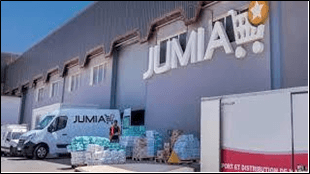
"Back to basics" is the strategy adopted by Francis Dufay at the helm of the Jumia group. Fewer restaurant deliveries, reduced logistics costs to refocus on what made Jumia — sometimes nicknamed the African Amazon — successful: online commerce.
Jumia switched to relay points where customers come to pick up their packages, significantly reducing costs. The loss of $8 million in the first quarter of 2024 is far from the $28 million in the same period last year. Jumia is still not profitable but is returning to growth.
II.5 Shaping the Future of Sub-Saharan Logistics
The supply chain industry is at a turning point in Sub-Saharan Africa. Technology and sustainability are becoming central to solving longstanding challenges. As 2025 unfolds, the landscape offers transformative opportunities for SSA businesses. By adopting trends such as digitization, sustainability, and regionalization, local enterprises can position themselves competitively. Policymakers and private actors must work in tandem to address barriers, ensuring long-term growth and resilience.
References
- Association for Supply Chain Management (ASCM) — Top 10 supply chain trends for 2025
- KPMG — Six Supply Chain Trends to Watch in 2025
- Forbes — Supply Chain Trends for 2025
- Unitrans Africa — Logistics and Supply Chain Trends for 2025
- S&P Global — Key Themes for 2025 in Sub-Saharan Africa
- Maersk — Building a Sustainable Future for Africa's Supply Chains